A renewed discussion about a 2015 interview with Russell Brand has raised questions about media culture, public accountability, and how broadcasters and politicians approached controversial figures in the past.
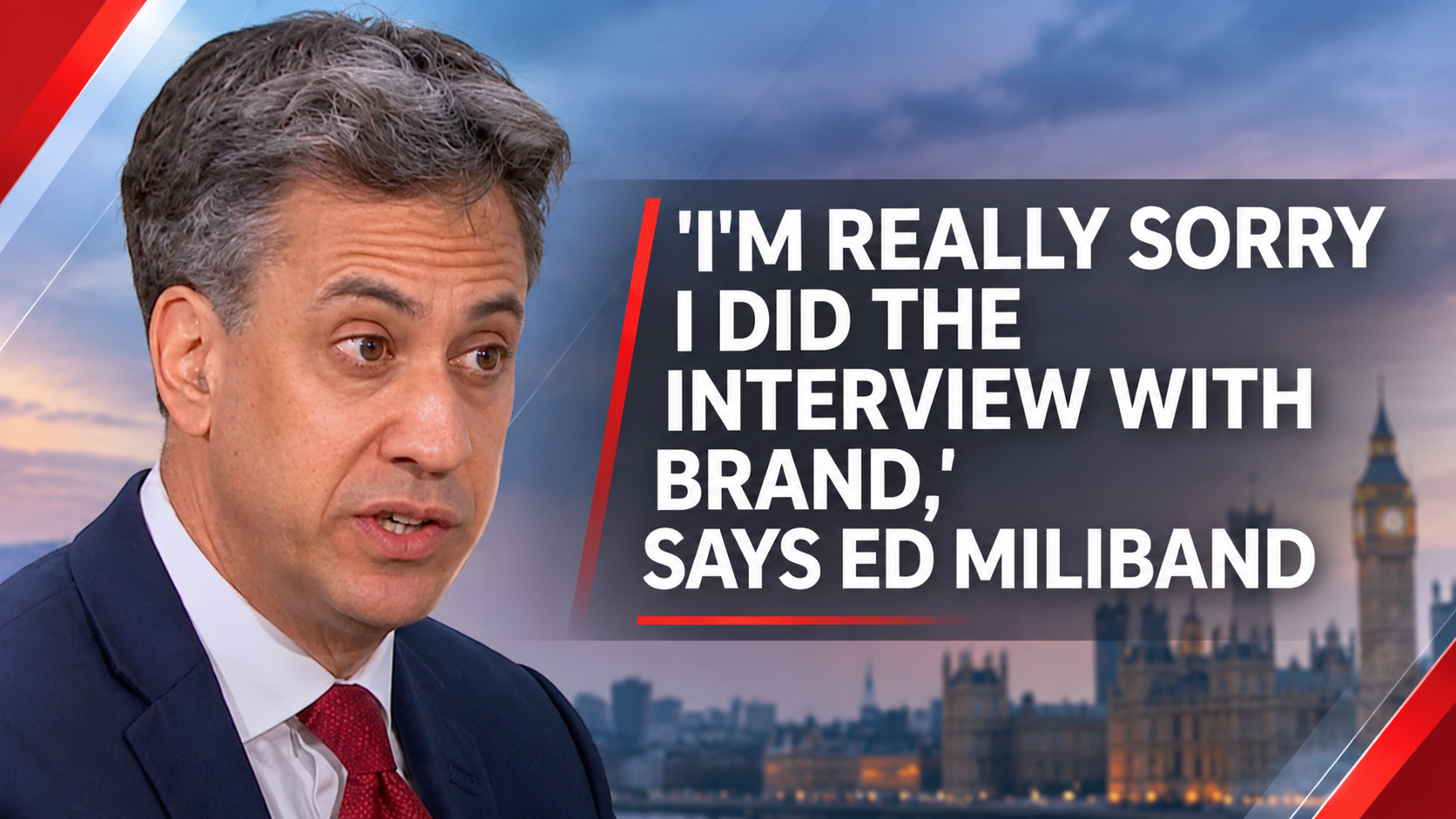
During a recent interview, a political figure was asked about his decision to interview Russell Brand in 2015 and his subsequent comments expressing regret over the encounter. The discussion focused not only on the interview itself but also on the broader cultural environment that allowed certain behaviour to be treated as entertainment.
Regret Over the 2015 Russell Brand Interview
Responding to questions about the earlier interview, the politician said his thoughts were primarily with the people who had come forward with allegations against Brand.
He described the reported experiences of the victims as deeply disturbing and criticised Brand’s public comments, arguing that they showed an unacceptable lack of remorse and sympathy.
He also reiterated that he regretted conducting the interview, explaining that he would not have agreed to it had he known about the allegations that subsequently emerged.
However, the interviewer challenged this explanation, suggesting that focusing on what was known at the time could overlook wider questions about the attitudes and standards that existed within the media industry.
Questions About Media Culture and Public Attitudes
A central theme of the conversation was the culture surrounding entertainment and public figures during the period when the interview took place.
The interviewer questioned whether there had been an expectation that audiences, journalists, and other public figures should simply laugh along with controversial jokes and behaviour rather than challenge them.
The discussion raised a broader question about whether certain attitudes had been accepted too easily across the media, politics, and entertainment industries.
In response, the politician acknowledged that society should examine the culture of that period and consider what lessons could be learned. He maintained, however, that he had not intended to endorse Brand through the interview.
Political Context Behind the Interview
Explaining his original motivation, the politician said the interview had taken place against a particular political backdrop.
At the time, Russell Brand had attracted significant attention for encouraging people not to vote. His comments had gained widespread visibility, including through an interview with journalist Jeremy Paxman, in which Brand questioned whether voting could make a meaningful difference.
The politician explained that he was contesting a general election and considered Brand’s message potentially damaging to democratic participation.
According to his explanation, the purpose of the interview was to challenge Brand’s position on voting rather than promote or support him.
Revisiting the BBC Controversy
The conversation also touched on Brand’s previous departure from the BBC. The interviewer referred to the fact that Brand had already been dismissed by the broadcaster, raising questions about what was understood about his conduct at the time.
The politician acknowledged that he was aware of Brand’s earlier controversy but argued that the information available to him then was different in nature and scale from the allegations that later came to public attention.
He emphasised that his intention during the 2015 interview had been to challenge Brand’s political message, not to defend his previous conduct.
A Wider Conversation About Accountability
Beyond the individual interview, the exchange highlighted the importance of examining how public figures are treated by the media and how cultural expectations can influence public reactions.
The interviewer stressed the need for a mature discussion about the past, particularly whether controversial behaviour was sometimes accepted because of the pressure to avoid challenging popular personalities.
The conversation also demonstrated the distinction between understanding the context of an earlier decision and recognising why that decision may be viewed differently today.
As public discussion surrounding Russell Brand continues, questions about media responsibility, accountability, and the treatment of people who make allegations remain significant topics of debate.
Conclusion
The discussion surrounding the 2015 Russell Brand interview reflects a broader reassessment of media culture and public attitudes. While the politician maintained that his original intention was to challenge Brand’s anti-voting message, he also acknowledged that he regretted conducting the interview.
Ultimately, the exchange raised an important question: how should media organisations and public figures reflect on past decisions when social expectations and public understanding evolve?