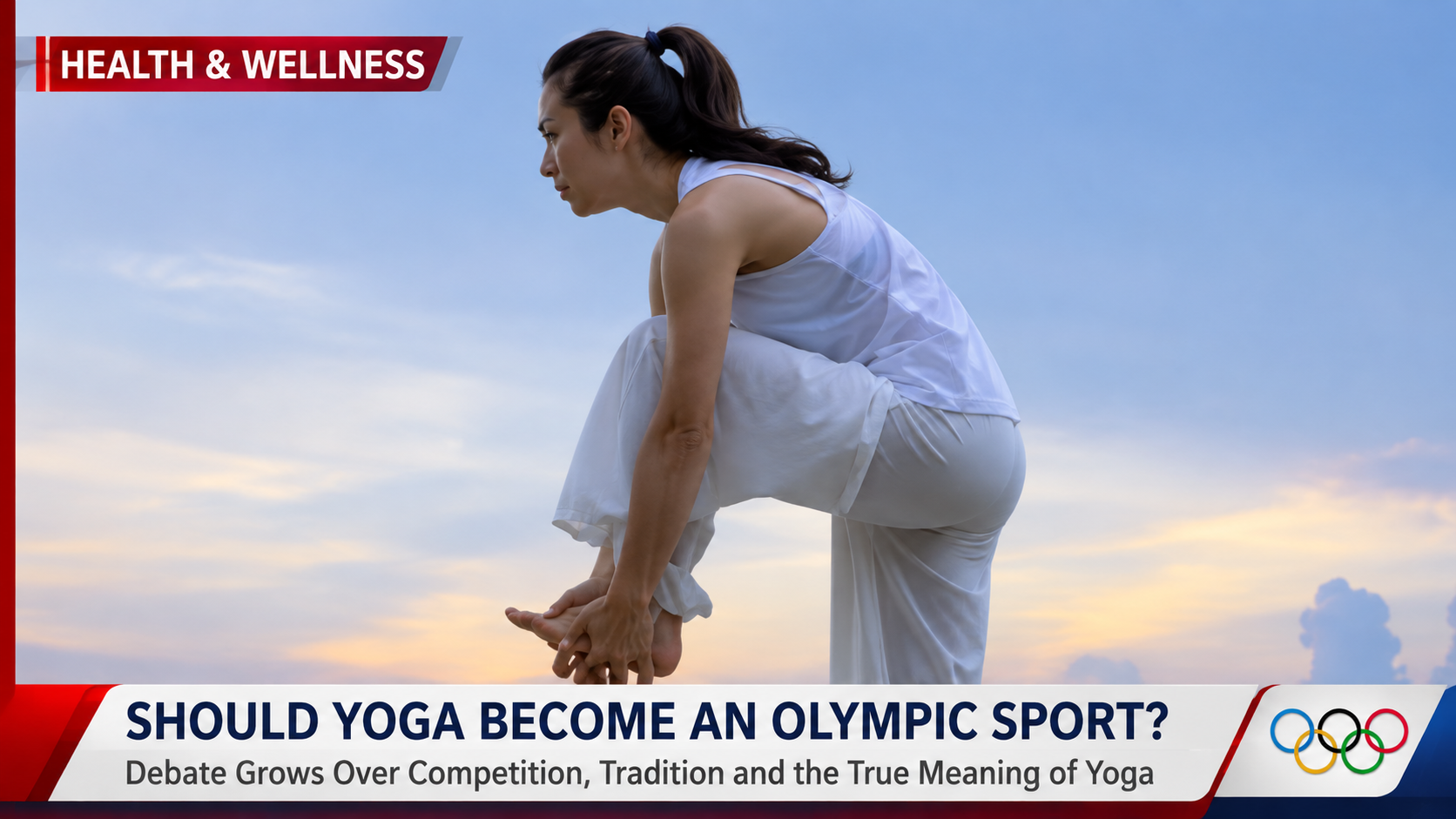
The possibility of yoga becoming an Olympic sport has sparked an interesting debate about the relationship between physical performance, spirituality, and the traditional values of the ancient practice.
While supporters believe Olympic recognition could introduce yoga to a wider international audience, critics argue that turning it into a competitive discipline could undermine its deeper meaning and spiritual foundations.
Supporters Say Olympic Recognition Could Promote Yoga
Those in favor of yoga becoming an Olympic sport believe the move could bring greater awareness of the practice and encourage more people to explore its physical and mental benefits.
One supporter argued that Olympic recognition could only have a positive impact by increasing public interest in yoga and highlighting the dedication required to perform challenging poses.
Competitive yoga involves significant discipline, determination, concentration, and control over the body and mind. Performing in front of an audience and fellow practitioners can also create a meaningful personal experience for participants.
For some people, yoga competitions are not simply about physical ability. They can also represent an opportunity to appreciate personal progress, celebrate individual capabilities, and recognize what the body can achieve at different stages of life.
One participant explained that practicing yoga in her 50s had helped her appreciate her body and the abilities she continued to maintain.
Critics Fear Yoga Could Lose Its Spiritual Meaning
However, not everyone agrees that yoga should become part of the Olympic Games.
Opponents argue that yoga is an ancient traditional practice with spiritual principles that extend far beyond physical flexibility, strength, or the ability to perform difficult poses.
They believe transforming yoga into a competitive sport could reduce it to a physical performance in which participants are judged and measured according to how well their bodies perform.
According to this perspective, placing yoga on a competitive stage risks shifting attention away from its traditional emphasis on mindfulness, personal development, and the connection between mind and body.
Critics also question whether society needs another platform that encourages people to compare their physical abilities and appearance with those of others.
Concerns About Body Image and Competition
Another important concern raised in the debate is the growing pressure people experience to meet physical expectations and associate their self-worth with their appearance or athletic abilities.
Critics suggest that institutionalizing yoga as an Olympic discipline could unintentionally reinforce these attitudes by encouraging comparisons between competitors.
Rather than focusing on personal well-being and individual progress, competitive formats could place greater emphasis on scores, rankings, and physical achievement.
For those who view yoga primarily as a holistic practice, this would represent a significant departure from its traditional purpose.
Can Yoga Remain Traditional While Becoming Competitive?
The discussion raises a broader question about whether traditional activities can evolve into organized competitive sports without losing their original identity.
Supporters see Olympic recognition as an opportunity to introduce yoga to new generations and celebrate the discipline, concentration, and physical control involved in advanced practice.
Critics, meanwhile, believe its spiritual and philosophical foundations should remain central rather than becoming secondary to athletic performance.
Ultimately, the debate is not simply about whether yoga requires athletic skill. It is about how the practice should be represented and whether competition can coexist with its traditional values.
A Debate That Goes Beyond Sport
Whether yoga should become an Olympic sport remains a subject of differing opinions. For some, it would be a positive step toward greater international recognition. For others, it could fundamentally change how people understand and experience yoga.
The central question remains: Can yoga enter the world of elite competition while preserving the principles that have defined the practice for centuries, or is its value best protected by keeping it outside the competitive sporting arena?
As the debate continues, one thing is clear: yoga means different things to different people, and any discussion about its future must consider both its physical and spiritual dimensions.