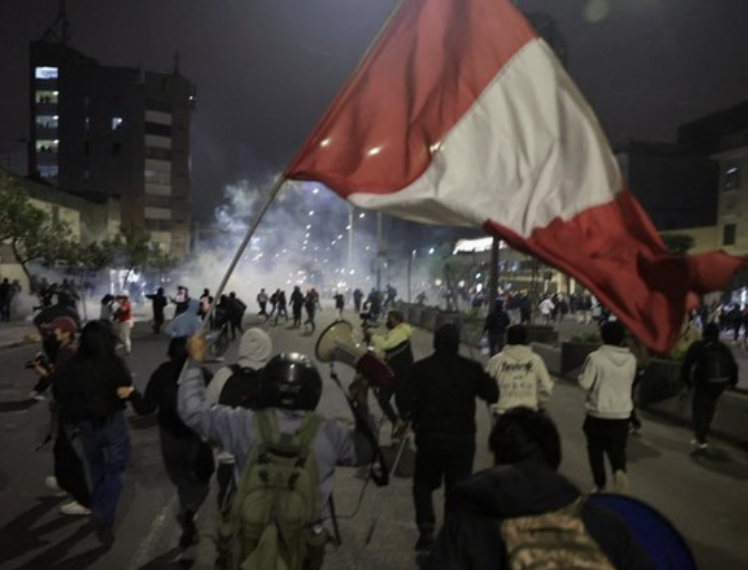
Albania’s growing protest movement has evolved from an environmental
campaign into a broader challenge to the government, raising questions
about transparency, public trust, and the future of the country’s
protected coastal areas.
Protests in Albania Intensify Amid Political Tensions
Albania has witnessed escalating demonstrations as students, environmental
activists, and other citizens take to the streets to express their
frustration with the government. In the capital, Tirana, protests have
developed into violent confrontations between some demonstrators and
riot police, with reports of damage to public buildings and other
property.
The unrest reflects a combination of concerns, including alleged
corruption, limited opportunities for young people, the quality of public
services, and government decisions affecting environmentally sensitive
areas.
Although the demonstrations initially focused on a controversial
tourism development, the movement has since expanded into a wider
expression of dissatisfaction with Prime Minister Edi Rama’s
administration.
What Is the Flamingo Revolution?
The movement known as the “Flamingo Revolution” takes its name from the
flamingos associated with the coastal wetlands at the center of the
controversy. What began as a campaign opposing a proposed luxury
development has grown into a broader protest movement.
Environmental activists have raised concerns about the potential impact
of construction on local wildlife, wetlands, and coastal ecosystems.
Critics also question whether the planning and approval process provides
sufficient transparency and environmental safeguards.
As demonstrations have continued, protesters have connected these
environmental concerns with wider demands for accountability, better
public services, and changes in political leadership.
Controversy Surrounding the Jared Kushner-Linked Resort
One of the central issues behind the movement is a proposed luxury
tourism development linked to Affinity Partners, the investment firm
associated with Jared Kushner, the son-in-law of US President Donald
Trump.
The development plans have drawn criticism because of their connection
to ecologically sensitive coastal areas in southern Albania. Conservation
groups warn that large-scale construction could put important habitats
and biodiversity at risk.
Supporters of the development argue that major tourism investments could
generate employment, attract international visitors, and contribute
to economic growth. Opponents, however, say that potential economic
benefits should not come at the expense of environmental protection
or public accountability.
The dispute highlights a broader challenge for Albania: how to attract
foreign investment while protecting natural resources and ensuring that
development decisions serve the public interest.
Why Are Protesters Calling for Rama’s Resignation?
The demonstrations have expanded beyond opposition to the resort
project. Protesters are also demanding Prime Minister Edi Rama’s
resignation, citing concerns about corruption, governance, and the
government’s response to public criticism.
For many demonstrators, the controversy has become a symbol of what
they see as a wider gap between political decision-makers and ordinary
citizens. Concerns about employment, education, living standards, and
access to public services have added to the frustration.
These allegations represent the views and demands of protesters and
critics. They should be distinguished from established legal findings
and from the government’s own account of the situation.
Government Response and Clashes With Police
Prime Minister Rama has defended the government’s approach to
investment and rejected calls for his resignation. His administration
has also criticized the violence associated with the demonstrations.
Police have used crowd-control measures to disperse protesters during
confrontations. Meanwhile, incidents involving damaged buildings and
attacks on property have increased concerns about public safety.
The escalation has intensified debate over the right to peaceful
assembly, the responsibilities of law enforcement, and the need to
prevent further injuries and destruction.
A lasting resolution will likely require meaningful communication
between the government, demonstrators, environmental organizations,
and other affected communities.
Environmental Protection Versus Economic Development
At the heart of the controversy is a question facing many countries:
how should governments balance economic development with environmental
protection?
Large tourism projects can bring investment and create jobs, but they
can also place pressure on fragile ecosystems. Wetlands and coastal
habitats are particularly important because they support wildlife and
contribute to the health of surrounding environments.
Independent environmental assessments, transparent planning decisions,
public consultation, and effective enforcement of conservation rules
can help communities evaluate the potential benefits and risks of
major developments.
For Albania, the outcome of the dispute could influence public
confidence in future development projects and the country’s efforts
to align its policies with European environmental standards.
What Happens Next?
The future of the Flamingo Revolution remains uncertain. Protesters
continue to demand political accountability and changes to the
government’s approach, while the administration has shown no
willingness to accept calls for the prime minister’s resignation.
The dispute over the proposed resort remains a focal point, but the
movement’s broader demands suggest that the challenges extend beyond
a single development project.
Whether tensions ease will depend in part on the government’s response,
the handling of environmental concerns, and the willingness of all
sides to pursue peaceful and transparent solutions.
For Albania, the central challenge is not only how to restore calm,
but also how to rebuild public trust while protecting the country’s
natural heritage and addressing citizens’ concerns.
Sources and Further Reading
This article draws on reporting about the protests, the proposed
tourism development, and the environmental debate in Albania.
Readers can consult the following news organizations for additional
context and updates: