Brazil’s presidential race highlights two contrasting approaches
to environmental protection, economic development, and the future
of the world’s largest tropical rainforest.
A Presidential Race With Global Environmental Implications
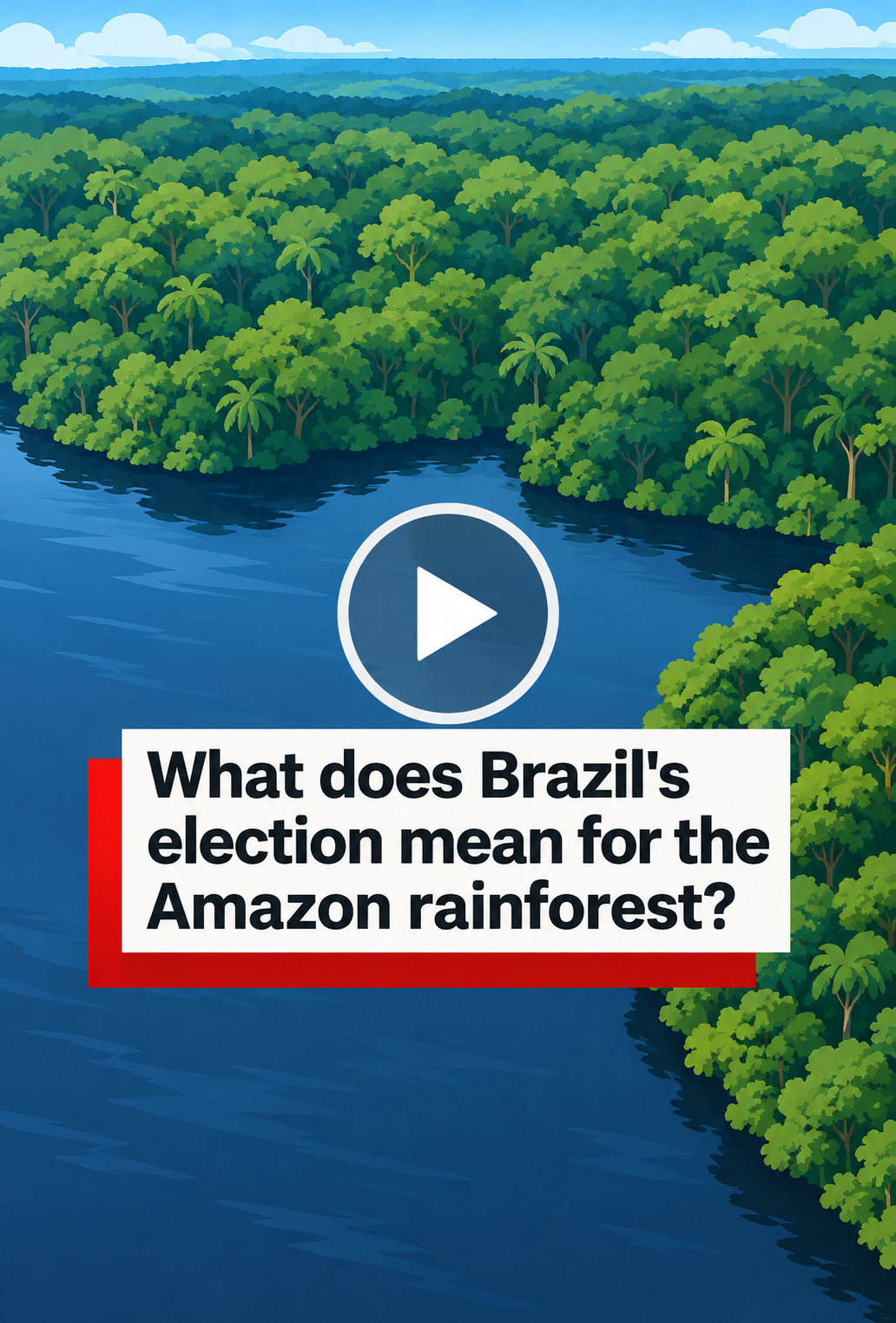
Brazil’s presidential election has placed the future of the Amazon
rainforest at the center of a wider debate over environmental
protection and economic growth. The outcome could influence how
the country manages deforestation, enforces environmental laws,
and balances development with the preservation of one of the
world’s most important ecosystems.
The political contest described in this report involves incumbent
President Luiz Inácio Lula da Silva and Senator Flávio Bolsonaro,
the son of former president Jair Bolsonaro. Their differing
political approaches reflect a broader disagreement over the role
of environmental regulations in Brazil’s economic future.
Concerns Over a Possible Return to Bolsonaro-Era Policies
During Jair Bolsonaro’s presidency, Brazil experienced a significant
increase in Amazon deforestation. According to the figures cited
in the original report, the rate of forest loss rose by approximately
60% during his administration.
Flávio Bolsonaro has been associated with an approach that favors
fewer restrictions on economic activities. Supporters of reducing
environmental regulations argue that doing so could make it easier
to expand economic opportunities and develop natural resources.
Critics, however, warn that weakening safeguards could increase
pressure on forests and threaten biodiversity.
The debate highlights a central challenge for Brazil: how to
encourage economic development while protecting forests that
support wildlife, local communities, and the global climate.
Lula’s Administration Reports a Decline in Deforestation
President Luiz Inácio Lula da Silva returned to office in 2023
after winning the 2022 election, making the protection of the
Amazon a prominent part of his environmental agenda.
Figures cited in the original report indicate that deforestation
declined by 71% under Lula’s administration, reaching its lowest
reported level since 1988. The decline has been presented as
evidence of renewed efforts to strengthen forest protection and
address illegal deforestation.
Nevertheless, Lula’s environmental record has also attracted
criticism. His support for oil exploration near the mouth of the
Amazon River has raised concerns among environmental advocates
about the potential risks to marine ecosystems and the consistency
of Brazil’s climate commitments.
Balancing Economic Growth and Environmental Protection
The debate over the Amazon extends beyond Brazil’s domestic
politics. The rainforest stores large amounts of carbon, supports
exceptional biodiversity, and plays an important role in regional
rainfall patterns. Continued forest loss can affect ecosystems
and communities both within and beyond Brazil.
At the same time, Brazil faces pressure to create jobs, improve
living standards, and develop its economy. Policymakers must
therefore consider how agriculture, infrastructure, energy
production, and conservation can coexist without causing
irreversible environmental damage.
The effectiveness of environmental enforcement, investment in
sustainable industries, and protection of Indigenous territories
are among the factors that can influence the future of the Amazon.
What Is at Stake for the Amazon?
The competing approaches outlined in the election debate illustrate
how political decisions can shape environmental policy for years
to come. A stronger emphasis on conservation may help reduce
pressure on forests, while changes to environmental regulations
could alter the incentives facing businesses and landowners.
Ultimately, the future of the Amazon will depend not only on
presidential policies but also on enforcement, economic conditions,
international cooperation, and the participation of communities
whose livelihoods are connected to the forest.