“`html
As more people turn to artificial intelligence for election guidance, questions are emerging about political bias, voter awareness, and the role of technology in democratic decision-making.
Artificial intelligence chatbots are increasingly becoming part of conversations about politics and elections. Some people are now using tools such as ChatGPT to compare political parties, understand policy proposals, and help them decide which candidates best reflect their views.
The trend has sparked a broader discussion about whether AI can help people become more politically informed or whether it could introduce new challenges for voters seeking reliable, balanced information.
More Voters Are Turning to AI for Election Guidance
During a discussion about political engagement, several participants described using AI chatbots to help them make sense of their voting choices.
One participant explained that they had been uncertain about whom to support and asked ChatGPT to compare the available options. Another participant said they had taken a similar approach, highlighting how AI tools may be becoming an additional source of information for people who are unsure where to begin their political research.
For voters who find traditional political coverage difficult to navigate, chatbots can offer a convenient way to ask questions, summarize policies, and explore differences between parties. However, the quality of the resulting information depends on the question asked, the sources used, and the AI system’s limitations.
Do AI Chatbots Have Political Bias?
One of the main concerns raised during the discussion was whether different AI models might produce different political recommendations or interpretations of the same issue.
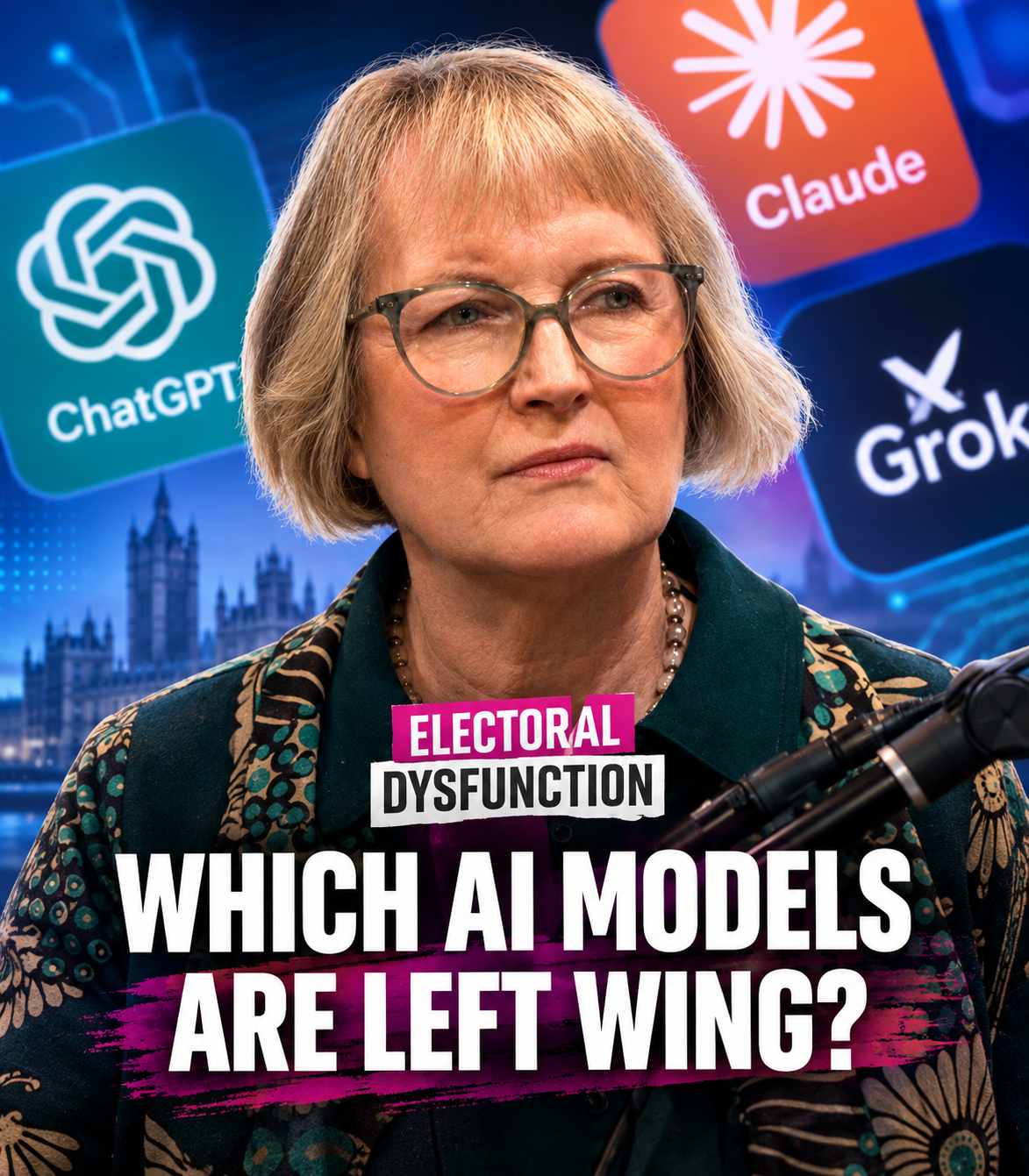
Participants referred to informal testing that reportedly found differences in the ideological tendencies of various AI systems. Chatbots such as ChatGPT, Claude, and Grok may respond differently to questions about political issues, depending on their training, design, instructions, and the information available to them.
However, a different answer does not automatically prove that a particular chatbot is left-wing or right-wing. Responses can vary because models interpret questions differently, emphasize different evidence, or apply different approaches to uncertainty and political neutrality.
To establish whether a model demonstrates a consistent political bias, researchers would need systematic testing across a broad range of questions, transparent evaluation methods, and clear criteria for measuring ideological preferences.
Can AI Help People Become More Politically Engaged?
The growing use of AI in political discussions presents both opportunities and risks.
On the positive side, chatbots can explain complicated policies in accessible language, summarize election manifestos, and help users identify the differences between competing proposals. These capabilities may be particularly useful for people who have not traditionally followed politics closely.
AI can also help voters develop more specific questions about subjects such as housing, healthcare, education, taxation, employment, and the environment.
Nevertheless, there are important limitations. AI systems can provide incomplete information, misinterpret political promises, present outdated details, or produce confident answers that are not adequately supported by evidence.
Users who rely on a single chatbot without checking its claims against independent sources may risk developing an incomplete understanding of the issues that matter to them.
Should Governments Introduce More Safeguards?
The discussion also raised questions about whether governments and election authorities need to respond to the growing role of AI in political decision-making.
Election periods are already subject to rules governing political advertising, campaigning, and the communication of information. AI introduces additional questions about transparency, misleading content, automated persuasion, and the responsibilities of technology providers.
Potential safeguards could include clearer disclosures about AI-generated political content, stronger measures against deceptive election-related material, and greater transparency about how chatbots handle political questions.
Any new rules would need to balance the protection of voters with freedom of expression, access to information, and the ability of people to use AI for legitimate research and education.
How Can Voters Use AI Responsibly?
AI can be a useful starting point for election research, but it should not replace independent judgment. Voters can take several practical steps to make better-informed decisions.
- Compare multiple sources: Check information against official party manifestos, election authorities, parliamentary records, and reputable news organizations.
- Ask balanced questions: Request a comparison of the main arguments for and against each policy rather than asking a chatbot to choose a candidate.
- Verify important claims: Check statistics, quotations, policy commitments, and claims about candidates against their original sources.
- Separate facts from opinions: Ask the chatbot to distinguish documented information from analysis, interpretation, and uncertainty.
- Consider personal priorities: Decide which issues matter most to you and evaluate how each party’s proposals align with those priorities.
AI Is Becoming Part of the Political Information Landscape
The use of AI chatbots during elections raises an important question about the future of political engagement. These tools can make information easier to access, but they also introduce new challenges involving accuracy, transparency, and public trust.
Whether AI ultimately improves political participation will depend on how these systems are developed, how their limitations are communicated, and how responsibly people use them.
For voters, the most reliable approach is to treat AI as a research assistant rather than a final authority. Understanding different perspectives, checking evidence, and making an independent decision remain essential parts of the democratic process.
“`