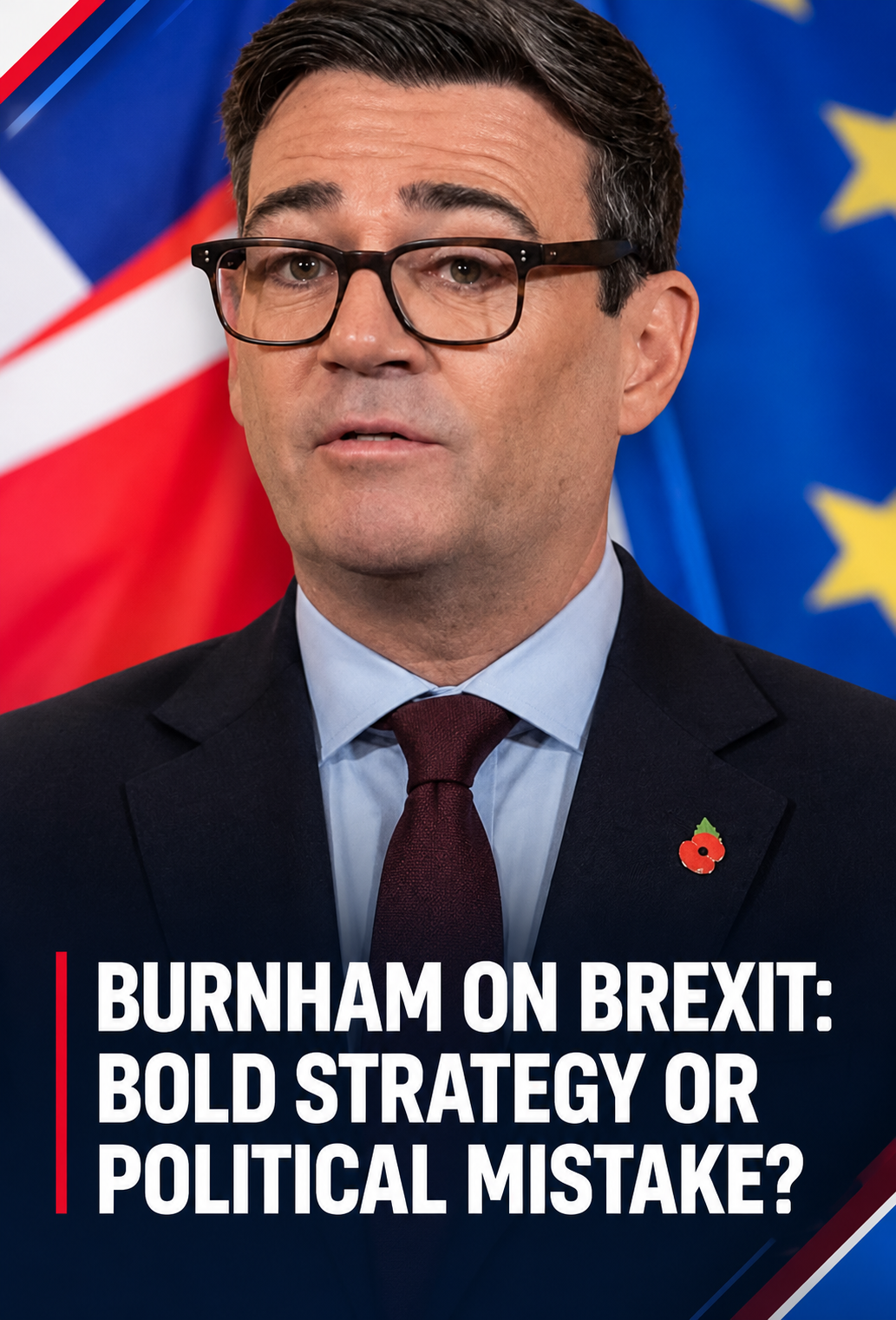
Andy Burnham’s changing stance on Brexit has renewed debate over immigration, freedom of movement and the UK’s future relationship with the European Union.
Why Has Andy Burnham Changed His Tone on Brexit?
Andy Burnham’s recent comments on Brexit have raised questions about whether the UK should reconsider its relationship with the European Union. Previously, Burnham argued that although Brexit had been damaging, reopening the debate was not the right priority.
However, his more recent remarks suggest a greater willingness to examine the consequences of Brexit, particularly its impact on the economy and immigration.
Burnham has argued that the country needs an honest discussion about how life has changed over the past decade. He has pointed to concerns about economic performance and immigration control as issues that deserve renewed attention.
The shift has prompted speculation about whether the debate surrounding Brexit could become a more prominent political issue again.
Could the UK Rejoin the European Union?
Despite the renewed discussion, the possibility of the UK rejoining the European Union remains a separate question from efforts to strengthen ties with European countries.
Prime Minister Keir Starmer has expressed support for closer relations with Europe and welcomed an honest discussion about freedom of movement and issues connected to Brexit, according to the statements referenced in the report.
Starmer has also reportedly said that he would like the UK to rejoin the EU during his lifetime, while making clear that he would not propose rejoining during the current parliamentary term.
These remarks highlight the distinction between improving cooperation with the EU and formally reversing Brexit. Any decision to pursue membership again would involve significant political and diplomatic considerations.
Poll Suggests Growing Support for Rejoining the EU
Public opinion is another factor shaping the debate. A national poll cited in the report found that 59% of Britons supported rejoining the European Union, compared with 32% who opposed the idea.
The poll also indicated substantial support among voters of several political parties. According to the figures presented, 85% of Labour voters favoured rejoining, alongside 76% of Liberal Democrat voters and 83% of Green voters.
These findings suggest that support for renewed EU membership could be an important consideration for political parties. However, polling results reflect public opinion at a particular time and do not necessarily translate into government policy or future election outcomes.
Immigration and Freedom of Movement at the Centre of the Debate
Immigration has emerged as one of the central issues in the renewed discussion about Brexit. Burnham has argued that the UK has lost a degree of immigration control and contrasted the current situation with the migration patterns that existed when the country was an EU member.
He suggested that migration under the previous arrangements involved more people moving between countries rather than settling permanently in the UK. His comments have raised questions about whether Brexit delivered the level of immigration control that supporters had expected.
Assessing that claim, however, requires examining the changes to immigration policy introduced after the UK left the European Union.
How Post-Brexit Immigration Rules Changed Migration Patterns
Migration figures discussed in the report indicate that policy changes introduced after Brexit played a significant role in shaping immigration levels.
Under the post-Brexit immigration system implemented during Boris Johnson’s premiership, visa routes were expanded to allow more non-EU nationals to enter the UK for work and study. These changes coincided with a sharp increase in net migration.
The Office for National Statistics has also identified evidence suggesting that international students became more likely to remain in the UK over the long term under the post-Brexit system.
In response to rising migration, the Conservative government subsequently tightened some eligibility rules for work and study visas. Those restrictions contributed to the decline in migration levels, according to the account presented in the report.
The figures underline the importance of distinguishing between the end of free movement for EU citizens and the immigration policies adopted by successive UK governments. Changes in migration levels cannot be attributed to Brexit alone without considering the wider policy framework and other contributing factors.
Nigel Farage Defends the Decision to Leave the EU
Not everyone agrees that the UK should reconsider its decision to leave the European Union. Nigel Farage, a prominent supporter of Brexit, has defended the outcome while arguing that the country has not fully realised the opportunities he believes Brexit could have delivered.
Farage maintained that leaving the EU was the right decision and strongly rejected the prospect of the UK rejoining the bloc.
His position reflects the continuing divide between those who believe Brexit remains the right long-term direction for the country and those who argue that closer integration with Europe would offer economic and political benefits.
Kemi Badenoch Questions the Government’s Approach
Conservative leader Kemi Badenoch has also criticised the Prime Minister’s approach, arguing that Starmer has not fully considered the implications of the debate.
Her response highlights the political risks facing the government as discussions about Brexit, immigration and closer European relations return to the spotlight.
For Labour, the challenge is to address concerns about the UK’s economic performance and migration system without creating further divisions over a decision that has shaped British politics for years.
What Does the Renewed Brexit Debate Mean for UK Politics?
Andy Burnham’s changing tone has reopened questions about the long-term consequences of Brexit and whether the UK’s relationship with Europe should evolve further.
Support for rejoining the EU, concerns about immigration control and disagreements among political leaders are likely to remain important elements of the discussion. However, closer cooperation with the EU does not automatically mean that the government intends to seek membership again.
Whether Burnham’s intervention becomes a significant political turning point or creates further disagreement remains uncertain. Much will depend on how the government responds to public concerns and whether political parties can present a clear strategy for Britain’s future relationship with Europe.