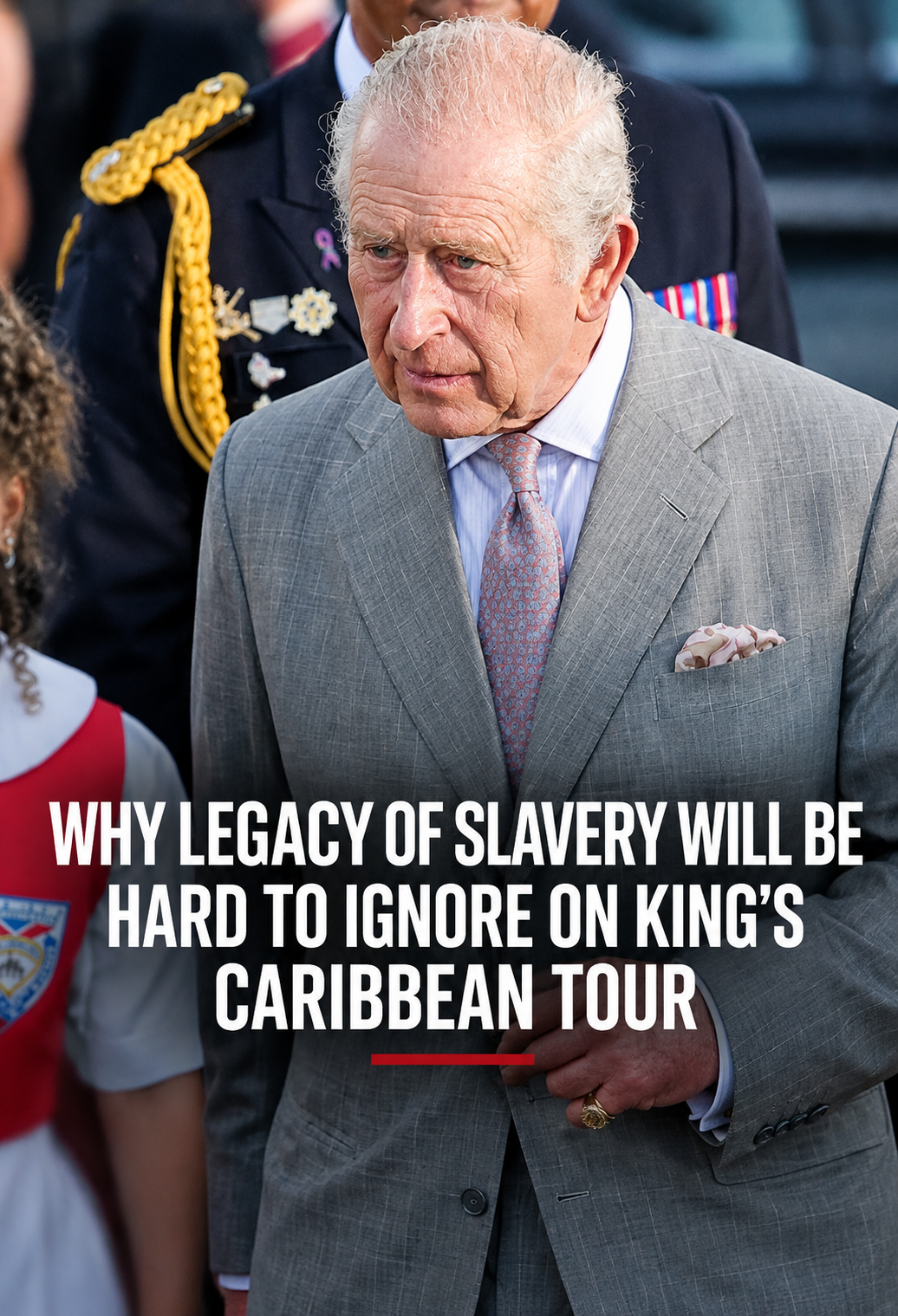
The King’s visit to the Bahamas has renewed discussions about the legacy of slavery, historical injustices, and growing calls for reparations across the Caribbean.

King Charles Arrives in the Bahamas Amid Calls for Reparations
King Charles has arrived in the Bahamas at the beginning of an eight-day tour of the Caribbean, where discussions about the historical legacy of slavery and demands for reparations are expected to remain central to public debate.
The King’s arrival was marked by ceremonial celebrations, official salutes, and a small but vocal protest. Although the demonstration involved only a limited number of participants, its message reflected a broader movement across the Caribbean calling for greater recognition of the lasting consequences of slavery.
Campaigners are urging the British monarchy and government to acknowledge historical injustices, issue an apology, and begin meaningful discussions about reparations for the descendants of enslaved people.
The issue has become increasingly prominent as Caribbean nations continue to examine their colonial histories and consider their future relationships with Britain.
King Charles Acknowledges the Historical Legacy of Slavery
During a youth rally at Clifton Park in the Bahamas, King Charles addressed the historical suffering associated with slavery while recognizing the achievements and cultural identity of the Bahamian people.
“It is only right that we should acknowledge the great suffering and injustices of the past in these islands and beyond, even as we rejoice in the successes of the present.”
The King also recognized that many of the most positive aspects of Bahamian culture emerged from a difficult historical period.
His remarks came at a significant location. Clifton Park was the site of the Bahamas’ independence celebrations in 1973, a ceremony attended by the then-Prince Charles.
Since that historic moment, discussions about colonialism, national identity, and the relationship between Caribbean nations and Britain have evolved considerably.
Protesters Demand an Apology and Compensation
Despite the official celebrations surrounding the royal visit, protesters used the occasion to highlight what they describe as the continuing economic consequences of slavery.
One campaigner argued that the financial benefits of compensation following the abolition of slavery largely went to former slave owners rather than the descendants of enslaved people.
“Since slavery was abolished, the compensation went to the slave owners. Nothing has come to us.”
Campaigners believe that the economic disadvantages experienced by many communities in the Caribbean are connected to the region’s colonial past.
They are calling for the British government and monarchy to take a more active role in addressing these historical grievances.
Some protesters have also questioned the Bahamas’ continued constitutional relationship with Britain, suggesting that the country could consider becoming a republic if meaningful progress is not made.
Why the British Government Says There Will Be No Apology
While King Charles has acknowledged the suffering caused by slavery, an official apology is a separate matter.
According to the reporting surrounding the royal visit, the British government’s position remains that there will be no formal apology for slavery.
The distinction is important because the King does not independently determine the British government’s official policy on the issue.
Nevertheless, campaigners argue that the royal visit provides an important opportunity to bring greater attention to their demands and encourage further dialogue about reparations.
Caribbean Tour to Continue in Guyana and Antigua and Barbuda
The Bahamas is the first stop on King Charles’ eight-day Caribbean tour, which is also scheduled to include Guyana and Antigua and Barbuda.
Officials at Buckingham Palace have indicated that the issue of slavery and its historical consequences will not be avoided during the visit.
At the same time, the tour is intended to strengthen existing relationships and develop future partnerships between Britain and the Caribbean nations involved.
However, for campaigners and other members of the public, the visit represents an opportunity to raise difficult questions about the colonial past and its continuing influence on the region.
The discussions surrounding the tour highlight the complex relationship between historical recognition, political responsibility, and the future of the Caribbean.
A Continuing Debate Over History and Reparations
King Charles’ visit to the Bahamas demonstrates how the legacy of slavery continues to shape public discussions across the Caribbean.
While the British government has maintained its position against a formal apology, campaigners remain determined to pursue recognition and reparations.
As the royal tour continues, the debate is likely to remain an important part of conversations about historical responsibility, economic inequality, and the future relationship between Britain and the Caribbean.