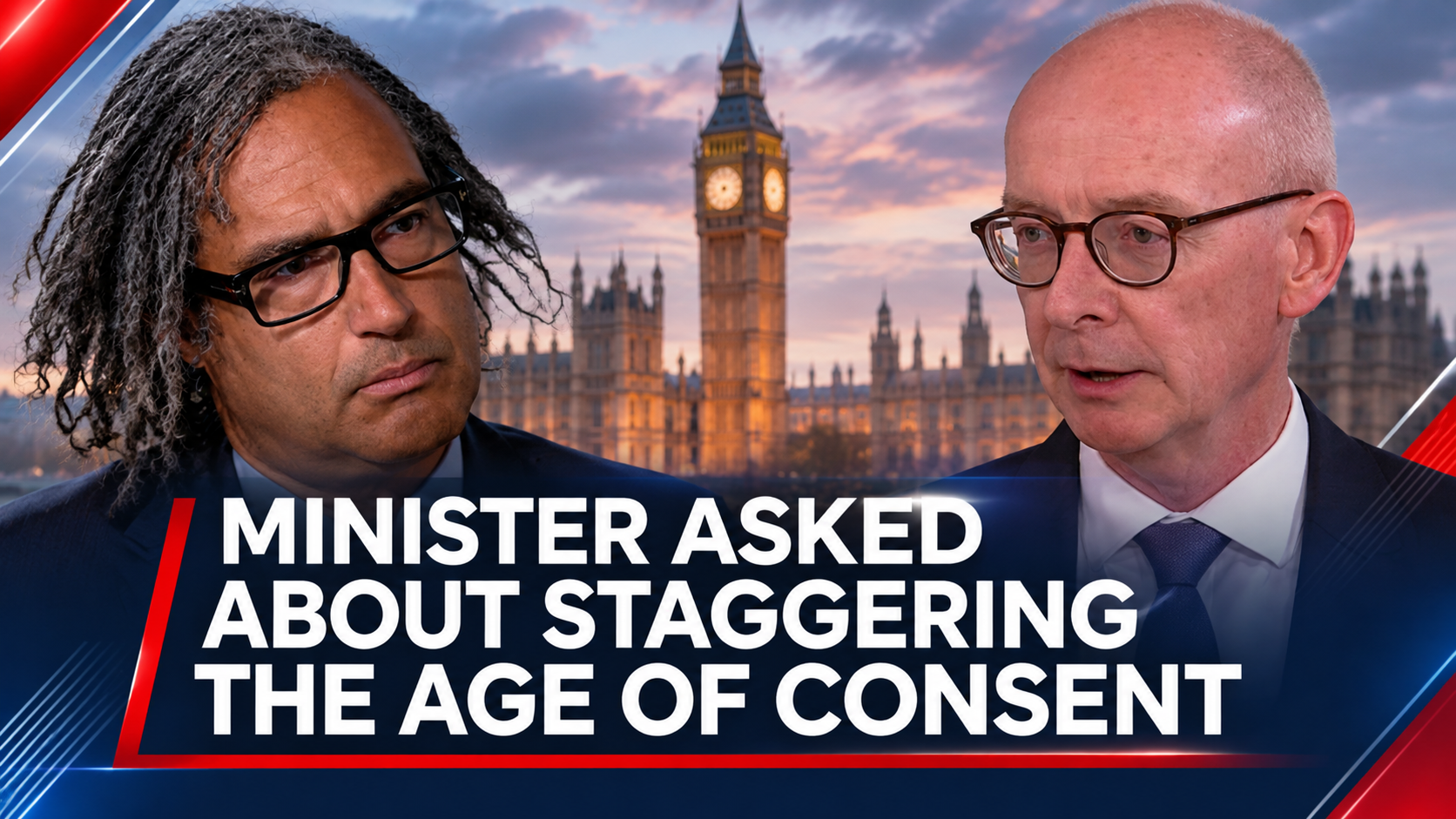
Renewed public discussion surrounding allegations involving prominent figures has prompted questions about age differences, power imbalances, and stronger protections for young people.
Ministers Face Questions Over Potential Changes to Age of Consent Laws
The possibility of introducing a staggered age of consent has entered the political discussion following renewed public attention to allegations of misconduct involving high-profile personalities Russell Brand and David Walliams.
During a recent political interview, a government representative was asked whether ministers were considering changes to existing age of consent legislation. The question followed reports suggesting that the government could examine a system in which different age thresholds might apply depending on the circumstances or age differences between individuals.
Although no specific policy has been confirmed, the response indicated that the government would likely consider the issue as part of broader discussions about preventing abuse and protecting vulnerable individuals.
Power Imbalances Become a Central Part of the Discussion
Responding to questions about the proposed measures, the government representative said that the country had been shocked by allegations involving powerful men and the potential misuse of authority.
The representative acknowledged that significant age differences can sometimes contribute to unequal relationships, particularly when one individual holds considerably more influence, experience, or social power than the other.
The discussion highlighted a wider concern about situations in which individuals may feel unable to challenge inappropriate behaviour because of differences in status, authority, or professional influence.
However, the government has not yet outlined how a staggered age of consent system would work or whether such a proposal would become part of future legislation.
Government Has Not Confirmed a Final Decision
When asked directly whether the government was actively considering the proposal, the representative suggested that ministers would probably examine the issue.
Nevertheless, they emphasized that no final decision had been reached and that several important considerations would need to be addressed before any policy could be announced.
These considerations could include the legal implications of changing existing legislation, the protection of young people, individual rights, and the practical consequences of introducing different age thresholds.
The government also indicated that its broader priority would be identifying effective ways to support people who experience abuse of power and ensuring that appropriate protections are available.
Workplace Protection and Changes to Non-Disclosure Agreements
Beyond the debate surrounding age of consent laws, the interview also highlighted proposed changes to non-disclosure agreements, commonly known as NDAs.
These agreements are sometimes used in workplace disputes and settlements. Concerns have been raised about situations in which confidentiality provisions may prevent individuals from speaking openly about inappropriate conduct or workplace abuse.
The government representative said that changes were already being introduced to address the use of NDAs in circumstances involving workplace misconduct.
The stated objective is to ensure that employees, particularly young women, can attend work and perform their responsibilities without fearing that individuals in positions of authority will misuse their influence.
Stronger workplace protections could also help create an environment in which people feel more confident reporting inappropriate behaviour and seeking support when problems arise.
Why the Debate Matters for Young People
Discussions about age of consent legislation involve several important legal and social considerations. While age differences alone do not necessarily indicate exploitation, differences in authority, experience, financial circumstances, and influence can create situations in which one individual has significantly more control than another.
Any potential legislative changes would therefore need to consider how to protect young people while maintaining clear legal standards and safeguarding individual rights.
Public discussions surrounding high-profile allegations have also renewed attention to the importance of accountability, consent, and appropriate professional boundaries.
What Happens Next?
For now, the possibility of introducing a staggered age of consent remains an issue for further government consideration rather than a confirmed policy change.
Ministers are expected to face continued questions about how existing protections could be strengthened and whether additional legal measures are necessary to address abuse of power.
Any future proposal would require careful examination of its legal framework, potential effects, and ability to provide meaningful protection to those most at risk.
For the moment, the government’s comments indicate that the wider debate about consent, workplace safety, and the misuse of authority is likely to remain an important part of the political discussion.