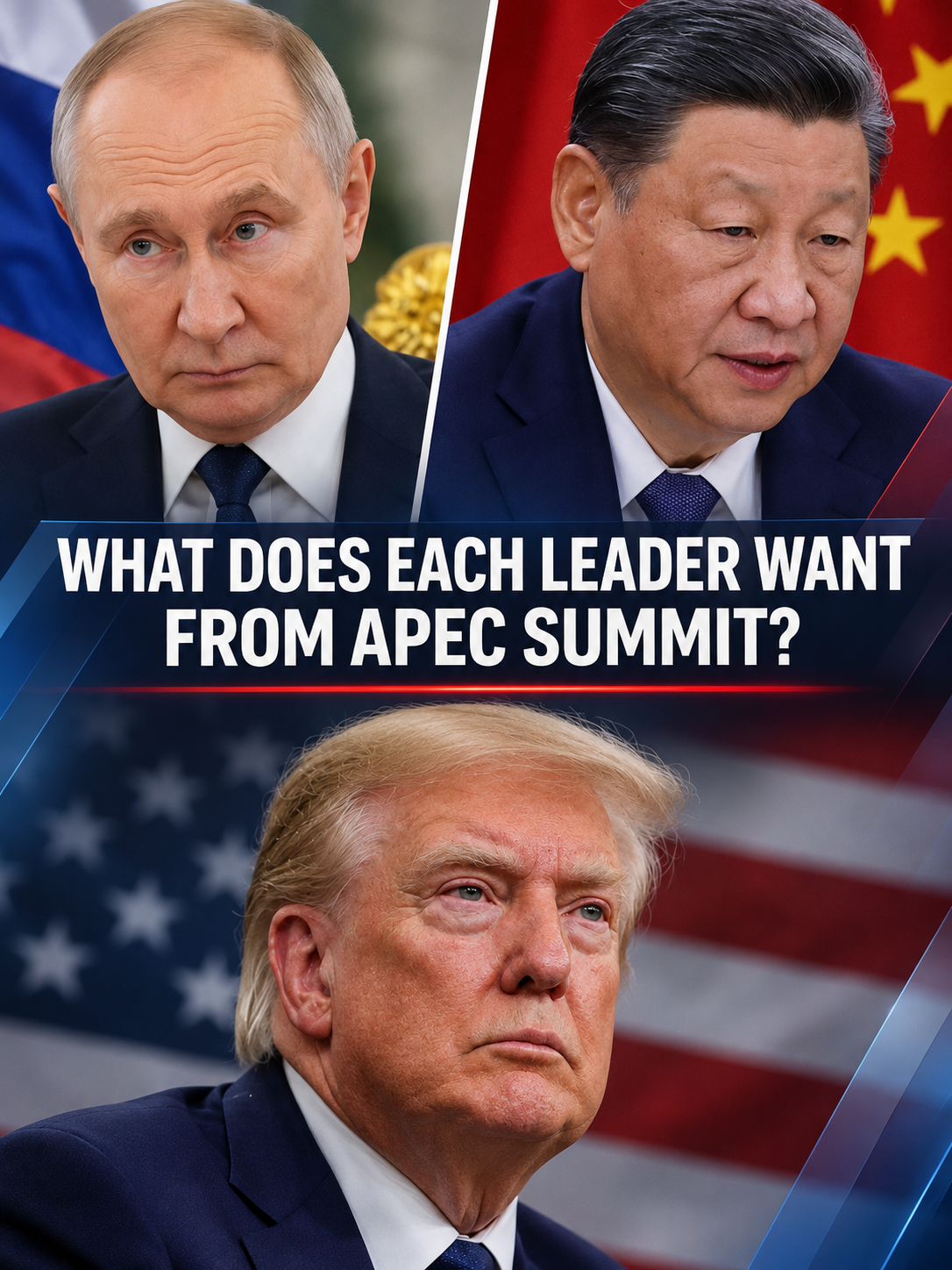
Three of the world’s most influential leaders are preparing for a diplomatic encounter that could attract global attention. Russian President Vladimir Putin, US President Donald Trump, and Chinese President Xi Jinping are expected to meet on the sidelines of the Asia-Pacific Economic Cooperation (APEC) gathering in Shenzhen, China.
Although the meeting is unlikely to produce major diplomatic breakthroughs, the political significance is considerable. Each leader has different objectives, domestic pressures, and international interests that could shape the discussions.
Beyond the public appearance, the encounter could also reveal important developments in relations between the world’s three major powers, particularly regarding the Ukraine war, nuclear policy, international security, and technological competition.
Putin Seeks International Recognition and a Ukraine Settlement
For Russian President Vladimir Putin, the meeting represents an opportunity to strengthen Russia’s position on the international stage. Russia has faced considerable diplomatic isolation following its invasion of Ukraine, making high-level engagement with Washington and Beijing particularly valuable.
Putin was reportedly among the strongest supporters of arranging the meeting. Appearing alongside the leaders of the United States and China could help reinforce his image as an influential global power broker rather than an internationally isolated figure.
Another important consideration is that Putin can participate without necessarily making immediate concessions. The opportunity to sit alongside Trump and Xi provides diplomatic visibility while allowing Russia to maintain its existing negotiating position.
His primary objective remains securing an end to the war in Ukraine under conditions favorable to Moscow. However, achieving such an outcome would depend on negotiations, international pressure, and the positions taken by the other participants.
Trump Wants a Historic Diplomatic Achievement
For President Donald Trump, the meeting offers a different set of opportunities. High-profile diplomatic engagements can strengthen his international image and potentially demonstrate his ability to influence major geopolitical developments.
Trump has expressed interest in discussing nuclear disarmament and the conflict involving Iran. Both subjects carry significant international implications, although reaching meaningful agreements would be difficult.
Progress on either issue could represent an important diplomatic achievement for his presidency. A successful negotiation would also provide an opportunity to demonstrate American leadership in addressing international security challenges.
However, Trump’s position carries considerable political risks.
The relationship between Xi Jinping and Vladimir Putin is particularly important. China and Russia have developed a close strategic partnership based on shared geopolitical interests and their opposition to several aspects of the current international order.
Trump’s decision to appear alongside both leaders could raise concerns among traditional American allies, particularly those who view Russia and China as strategic competitors.
The diplomatic optics may also become a subject of debate within the United States, where foreign policy decisions are often closely examined by political opponents, lawmakers, and the public.
Xi Jinping Looks to Strengthen China’s Global Leadership
For Chinese President Xi Jinping, hosting the meeting offers an opportunity to demonstrate China’s growing influence in international diplomacy.
By bringing together the leaders of Washington and Moscow, Xi could present China as an important diplomatic center capable of facilitating discussions between competing global powers.
The setting also allows Beijing to project an image of stability and international leadership at a time when both Russia and the United States face significant geopolitical challenges.
However, China’s position is not without complications.
Nuclear disarmament is one potential source of disagreement. China’s nuclear arsenal is considerably smaller than those of the United States and Russia, and Beijing has traditionally been cautious about participating in arms-control arrangements that could place it under similar obligations.
The Ukraine conflict presents another challenge. China has sought to maintain diplomatic relations with Moscow while presenting itself as a supporter of political dialogue and a peaceful resolution.
Beijing may therefore prefer to avoid becoming directly involved in negotiations that could complicate its relationship with either side.
Xi will also need to manage the meeting’s dynamics carefully. With three powerful personalities involved, maintaining control of the diplomatic agenda and ensuring that China remains central to the discussions could be challenging.
Why the Meeting May Not Produce Major Breakthroughs
Despite the international attention surrounding the encounter, expectations for immediate agreements should remain measured.
The three governments have different strategic priorities, and their disagreements extend across several major issues, including military security, economic competition, international alliances, and technological development.
Russia wants favorable conditions for ending the war in Ukraine. The United States is interested in nuclear security and other international conflicts, while China wants to protect its strategic interests and maintain its diplomatic influence.
These competing objectives make a comprehensive agreement difficult to achieve during a single diplomatic encounter.
Nevertheless, even without formal agreements, the meeting could provide valuable insight into the political relationships and negotiating positions of the three countries.
Private Meetings Could Reveal More Than the Main Summit
While the three-way encounter is likely to dominate international headlines, bilateral discussions between the leaders could prove equally important.
One-on-one meetings may provide greater opportunities to address sensitive issues that are difficult to discuss in front of all three participants.
Among the subjects attracting attention is the fallout from the reported Nvidia-related espionage controversy and its potential implications for the global artificial intelligence industry.
The controversy highlights the growing intersection between national security, advanced computing technology, and international competition.
Artificial intelligence has become a strategic priority for Washington and Beijing, particularly in areas involving advanced semiconductors, computing infrastructure, and technological innovation.
Any discussions surrounding Nvidia or related technology restrictions could offer clues about the future direction of the global AI race.
A Meeting With Global Political Consequences
The anticipated meeting between Trump, Putin, and Xi Jinping represents more than a diplomatic photo opportunity. It reflects the increasingly complex relationships between three countries whose decisions influence international security, economic stability, and technological development.
Each leader has something to gain, but each also faces significant political and diplomatic risks.
Whether the encounter produces concrete agreements or simply reinforces existing positions, its broader significance will depend on what happens after the cameras are gone.
For international observers, the most important developments may not emerge from the public summit itself, but from the private conversations and diplomatic signals that follow.