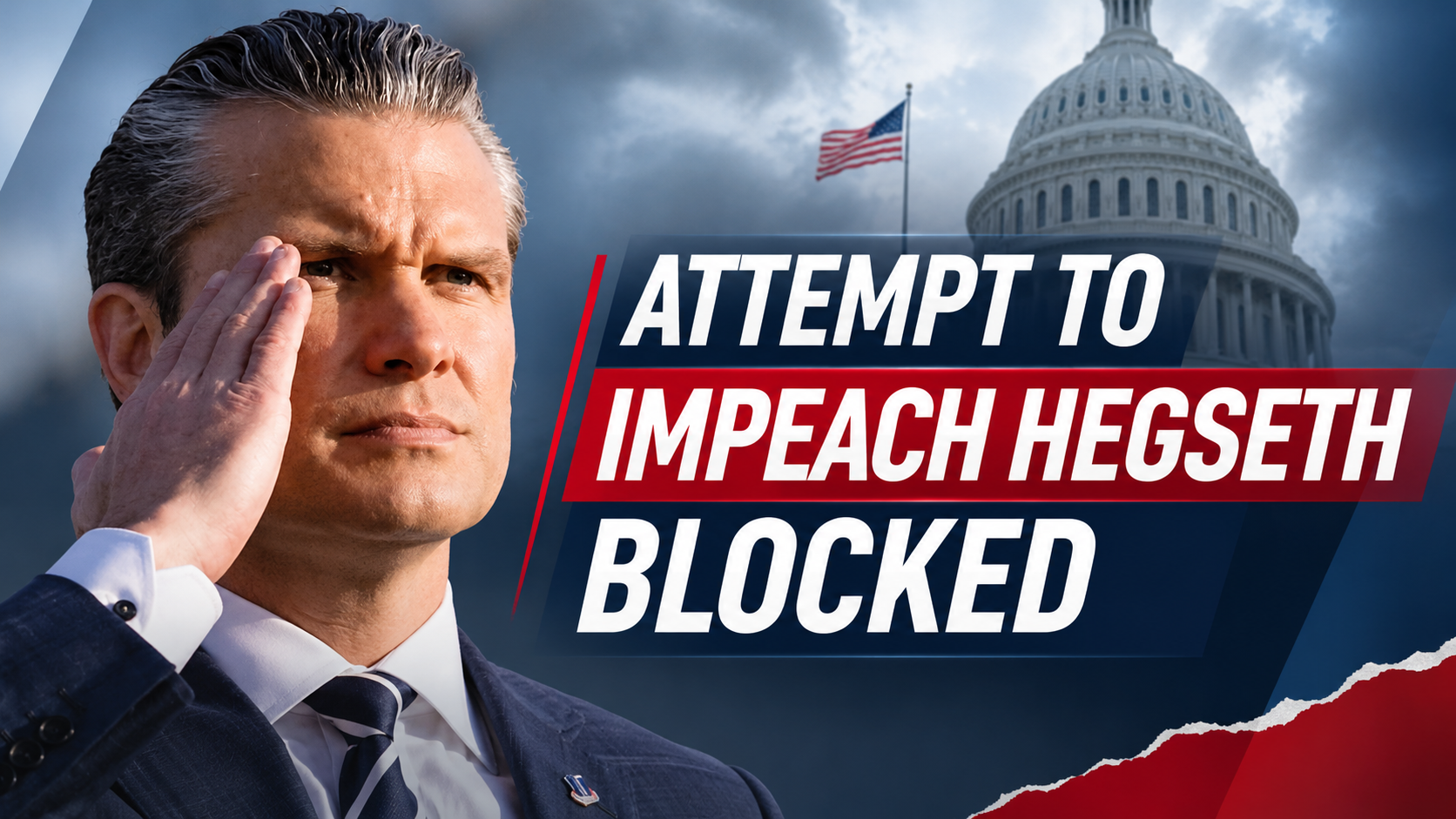
An effort to initiate impeachment proceedings against U.S. Defense Secretary Pete Hegseth has encountered a significant setback after a House vote prevented the proposed articles of impeachment from advancing to the next stage.
The initiative, led by Republican Representative Thomas Massie, centered on concerns over the constitutionality of President Donald Trump’s military campaign against Iran. Massie argued that the administration had pursued military action without obtaining the necessary authorization from Congress.
Impeachment Proposal Focuses on Congressional War Powers
The proposed impeachment effort reflected broader concerns about the limits of presidential authority in matters of military intervention. Massie’s position was that the president’s decision to engage in military action against Iran without congressional approval raised serious constitutional questions.
His proposal called for Defense Secretary Pete Hegseth to face impeachment over his role in the administration’s military policy.
Rather than immediately proceeding to a full House vote on impeachment, lawmakers first considered whether the articles should be referred to a committee for further examination.
This procedural decision became a critical obstacle for the initiative, effectively preventing the proposal from moving forward as its supporters had intended.
Republican Control of House Committees Shapes the Outcome
The outcome was influenced by the political composition of the House of Representatives, where Republicans retained control of key committees, including the House Judiciary Committee.
Because committee leadership plays an important role in determining how legislative proposals are examined and advanced, the vote created a substantial barrier to Massie’s impeachment initiative.
Although Democrats secured victories in the midterm elections, the incoming lawmakers are not scheduled to assume their new positions until January. Until that transition takes place, Republicans continue to exercise control over the House and its committee structure.
This political arrangement means that efforts to advance impeachment proceedings against Hegseth could remain difficult during the remainder of the current congressional session.
Massie Signals He May Continue the Impeachment Campaign
Despite the setback, Massie has indicated that the effort may not be over. He has suggested that he could introduce all eight articles of impeachment individually, potentially forcing lawmakers to consider each allegation separately.
Such a strategy could keep attention focused on the administration’s military decisions and the constitutional responsibilities of executive officials.
Democratic lawmakers may also pursue similar initiatives after the new congressional session begins in January. However, the success of any future impeachment effort will depend on political support, procedural decisions, and the willingness of lawmakers to move the proposals forward.
Political Pressure Mounts on Trump’s Defense Secretary
The controversy also raises questions about Hegseth’s political future within the Trump administration.
President Donald Trump has publicly expressed strong support for his defense secretary, suggesting that he is not immediately inclined to remove him from office.
Nevertheless, political considerations could influence any decision about a potential leadership change at the Pentagon.
If Trump were to replace Hegseth before January, his administration would have the opportunity to seek confirmation of a new nominee while Republicans still control the Senate, assuming the current political balance remains unchanged.
That possibility could become an important factor in the president’s calculations as pressure surrounding the defense secretary continues.
Iran Conflict Remains a Source of Political Controversy
Beyond the impeachment proceedings, the broader debate reflects public concerns about Trump’s approach to foreign policy.
During the presidential campaign, Trump repeatedly presented himself as a candidate who wanted to avoid unnecessary foreign conflicts and reduce American involvement in overseas wars.
The military campaign against Iran has therefore generated questions about whether his administration’s actions are consistent with those earlier political commitments.
For some critics, the issue is not limited to the military operation itself but also involves the constitutional process through which decisions about war and national security should be made.
The debate highlights the continuing tension between presidential authority, congressional oversight, and the United States’ role in international conflicts.
What Happens Next?
For now, the attempt to advance impeachment proceedings against Pete Hegseth has been significantly weakened by the House vote. However, Massie’s willingness to continue introducing impeachment articles suggests that the issue could return to the congressional agenda.
The upcoming transition in congressional leadership may also change the political environment surrounding future efforts.
Whether Hegseth remains in office, faces additional congressional scrutiny, or is eventually replaced will depend on decisions made by the Trump administration and the evolving balance of political support in Washington.
For the moment, the dispute remains part of a larger national debate over presidential war powers, congressional accountability, and the future direction of American foreign policy.