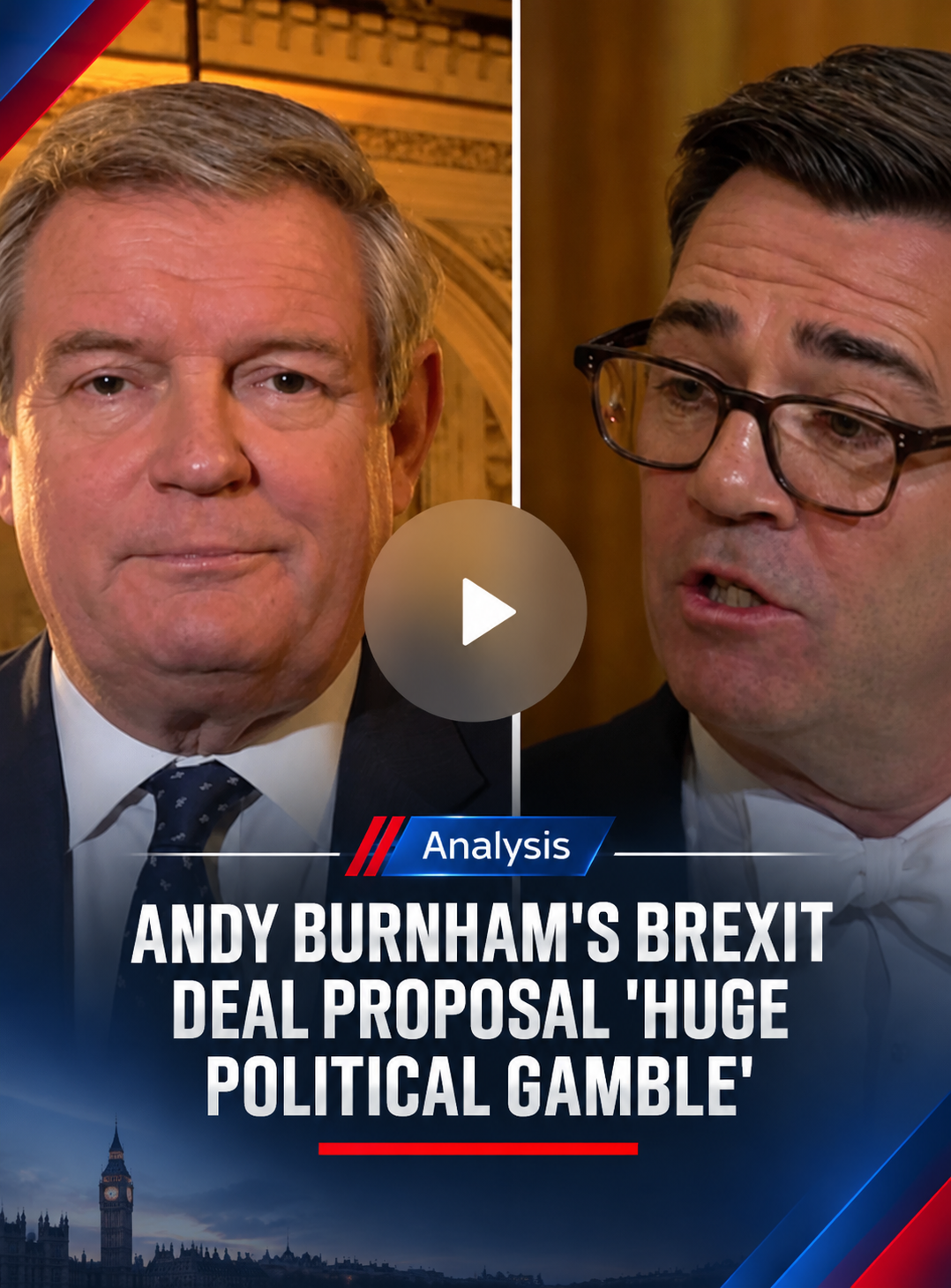
Andy Burnham has sparked fresh political debate after delivering a major speech criticizing Brexit and calling for a reassessment of Britain’s long-term relationship with the European Union.
A Controversial Speech at the Guildhall
Andy Burnham has delivered a major political speech at the Guildhall in the City of London, addressing Britain’s future relationship with Europe and outlining the possibility of a significant policy shift following Brexit.
The speech, delivered at an event traditionally associated with prime ministerial addresses at the Lord Mayor’s Banquet, attracted considerable attention because of its criticism of the UK’s decision to leave the European Union.
Burnham argued that Britain could not afford another decade marked by the economic and political difficulties experienced since the Brexit referendum. He suggested that the country needed to reconsider its international position and explore opportunities for closer cooperation with European partners.
His remarks are likely to appeal to supporters of closer European integration while provoking criticism from those who continue to defend Brexit.
Brexit and Its Impact on Britain’s Position
During his address, Burnham described Brexit as a turning point that contributed to greater isolationism and protectionism in international politics.
He argued that the decision to leave the European Union had weakened Britain’s position at a time when international cooperation was becoming increasingly important.
In his assessment, the consequences extended beyond domestic economic concerns. He connected the UK’s departure from the EU to broader geopolitical challenges, particularly the security situation in Europe and the continuing war in Ukraine.
Burnham also highlighted the importance of cooperation among NATO members and European countries, arguing that political divisions could benefit nations seeking to weaken Western alliances.
Economic Pressures and the Cost of Living
The speech also addressed the economic pressures facing British households, particularly rising food and fuel costs.
Burnham referred to the impact of Russia’s invasion of Ukraine on international energy and food markets. He argued that global instability had created additional financial pressure for ordinary families, especially those on lower incomes.
His comments highlighted the connection between international developments and everyday economic challenges experienced by households across Britain.
However, the broader debate over the UK’s economic performance involves several factors, including global market conditions, domestic policy decisions and changes in international trade.
Government Plans to Strengthen Relations With the EU
Burnham’s remarks came ahead of a planned UK-EU summit, where closer cooperation between Britain and the European Union was expected to be an important subject of discussion.
The government has indicated that it intends to introduce legislation to establish the groundwork for its proposed relationship reset.
The objective is to explore areas where Britain and the European Union could work more closely together while recognizing that both sides have changed significantly since the Brexit referendum.
Burnham also suggested that discussions about the UK’s long-term relationship with the EU should consider several possible options. These proposals would require further assessment before being presented to Parliament for future consideration.
He emphasized that the British public should ultimately have a central role in determining the country’s future direction.
Political Divisions Over the Future of Brexit
Despite the potential support for closer European relations, the proposal presents significant political challenges.
Some figures within the governing Labour Party are reportedly concerned that reopening the Brexit debate could create unnecessary divisions, particularly at a time when the government faces several domestic policy priorities.
Criticism is also expected from politicians who strongly support Britain’s departure from the European Union. Conservative and Reform UK representatives are likely to challenge proposals that they view as undermining the outcome of the 2016 referendum.
The debate could therefore develop into a major political confrontation, with different parties presenting competing visions for Britain’s economic future, national sovereignty and international partnerships.
What Could a UK-EU Reset Mean for Britain?
A closer relationship between the United Kingdom and the European Union could have implications for trade, economic cooperation, security and diplomatic relations.
However, the precise impact would depend on the agreements reached by both sides, the legislation introduced by the government and the political support available in Parliament.
Any substantial change would also require careful consideration of Britain’s existing commitments and the expectations of voters who supported Brexit.
For now, the proposed reset remains part of an evolving political discussion rather than a completed policy change.
Conclusion
Andy Burnham’s speech has brought Britain’s relationship with Europe back into the political spotlight. His criticism of Brexit and support for closer cooperation reflect growing debate about the country’s position in an increasingly interconnected world.
Whether the proposed reset can gain sufficient political support remains uncertain. What is clear is that Britain’s future relationship with the European Union is likely to remain an important issue in the country’s political and economic discussions.