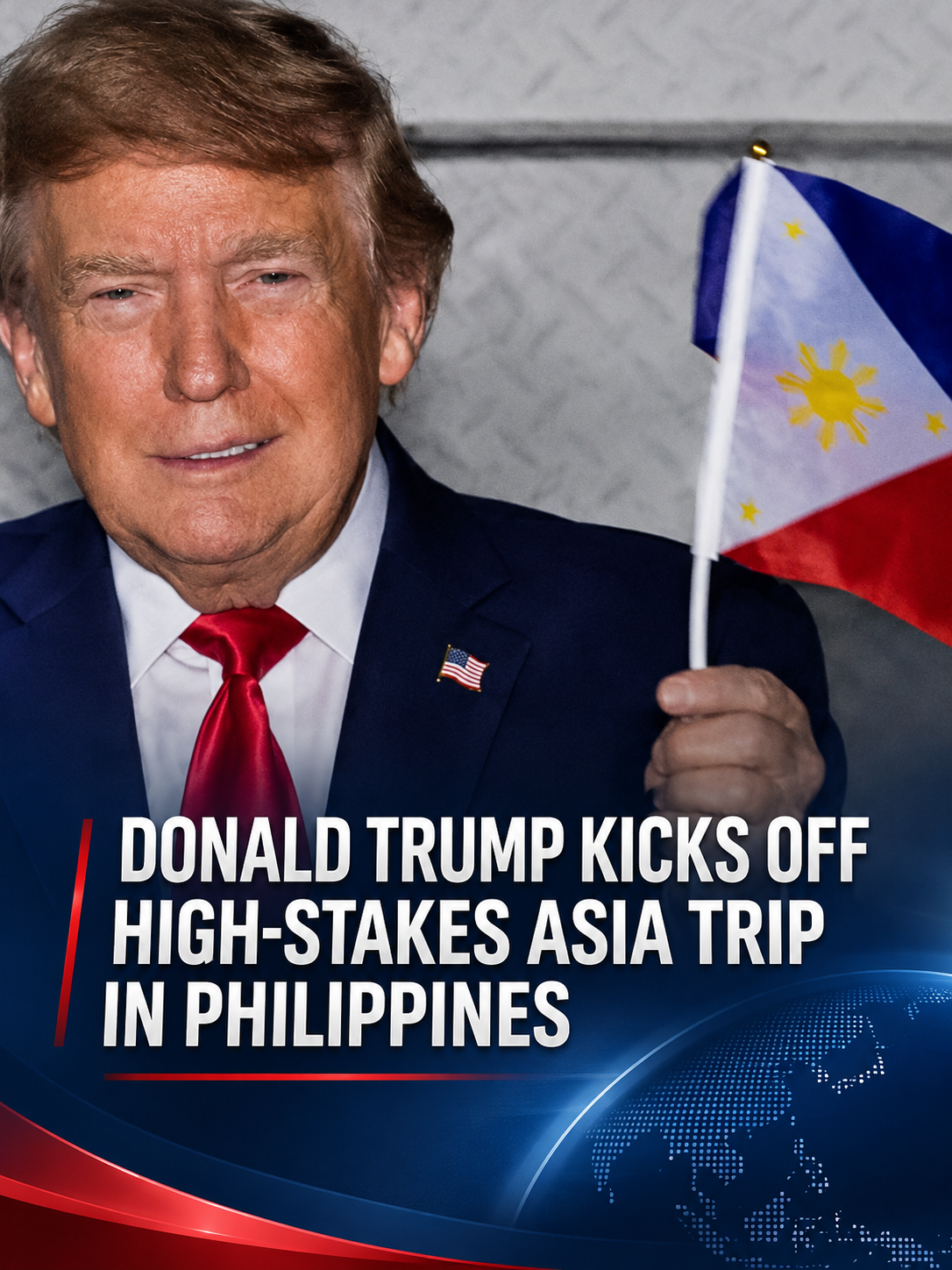
U.S. President Donald Trump is beginning a major diplomatic tour of Asia, starting in the Philippines at a time when Washington faces growing political and economic challenges. His visit comes amid regional concerns over trade policies, rising energy costs, and increasing strategic competition between the United States and China.
The trip is expected to focus on strengthening diplomatic relationships with Southeast Asian countries while reaffirming America’s commitment to regional security and economic cooperation.
ASEAN Meeting Takes Center Stage
One of the main events during Trump’s visit is the ASEAN meeting, which brings together Southeast Asian nations to discuss regional economic cooperation, political stability, and shared security concerns.
The Association of Southeast Asian Nations (ASEAN) represents countries with different political systems, economic conditions, and foreign policy priorities. However, many members share similar concerns about rising energy costs and the consequences of geopolitical tensions.
Disruptions associated with the conflict involving the United States, Israel, and Iran have placed additional pressure on global energy markets. Higher oil and gas prices can affect transportation, manufacturing, electricity costs, and household spending across Southeast Asia.
Trade Tensions Complicate U.S. Relations With Southeast Asia
Beyond energy concerns, American trade policies have also become an important issue for Southeast Asian governments. Tariffs and trade restrictions have created uncertainty for businesses and exporters across the region.
Several ASEAN economies depend heavily on international trade and global supply chains. As a result, changes in U.S. trade policy could influence investment decisions, export performance, and long-term economic planning.
These developments have encouraged some regional governments to diversify their international partnerships and strengthen economic relationships with other major trading partners.
For Washington, maintaining strong relationships with ASEAN members is strategically important. Southeast Asia occupies a significant position in international trade routes and regional maritime security, making cooperation with these countries an important element of U.S. policy in the Indo-Pacific.
Philippines Meeting Could Highlight South China Sea Dispute
Another important part of Trump’s visit is his expected meeting with Philippine President Ferdinand Marcos Jr.
Their discussions could place particular attention on the South China Sea, one of the most strategically sensitive maritime regions in the world.
The dispute involves competing territorial claims, maritime access, fishing rights, and broader security interests. The Philippines has maintained close security ties with the United States, while also navigating complex economic and diplomatic relations with China.
Observers will be watching whether the meeting produces stronger commitments to bilateral cooperation, particularly in maritime security and regional stability.
Trade Agreements and Regional Cooperation
Trade is also expected to feature prominently in Trump’s discussions with Southeast Asian leaders. Potential agreements and negotiations, including engagement with Thailand, could provide opportunities to address market access and economic cooperation.
However, expectations for major foreign policy announcements during this stage of the tour remain relatively limited. Much of the attention is likely to focus on diplomatic engagement and reinforcing existing relationships.
China Could Become the Most Important Stop on Trump’s Tour
While the Philippines and ASEAN meeting represent important diplomatic priorities, Trump’s subsequent engagement with China is likely to attract even greater international attention.
Relations between Washington and Beijing remain central to global economic and security developments. Trade disagreements, technological competition, and regional security concerns continue to shape the relationship between the two major powers.
Discussions involving Chinese President Xi Jinping could provide an opportunity to address several sensitive issues, including trade relations, regional security, the conflict involving Iran, and nuclear non-proliferation.
Any progress in these areas could have implications beyond the United States and China, particularly for countries across Asia that depend on stable international trade and energy markets.
Technology and National Security Remain Sensitive Issues
Technology is another important dimension of the broader relationship between Washington and Beijing. Advanced semiconductors, artificial intelligence, and access to critical technologies have become major areas of strategic competition.
Companies operating in the semiconductor industry are increasingly affected by government regulations, export controls, and national security considerations.
Nvidia, one of the world’s leading technology companies, has become particularly relevant to discussions about advanced computing and artificial intelligence. Its business interests illustrate how closely technological innovation is now connected to international economic and security policies.
What Trump’s Asia Tour Could Mean for the Region
Trump’s diplomatic tour comes at a complicated moment for Southeast Asia. Governments across the region must balance economic opportunities, energy security, trade relationships, and growing geopolitical competition.
For ASEAN countries, maintaining constructive relationships with both Washington and Beijing remains an important diplomatic objective. Their ability to preserve economic cooperation while managing security challenges could influence the region’s future stability.
Ultimately, the success of Trump’s visit may depend less on major public announcements and more on whether his administration can restore confidence among regional partners and demonstrate a consistent commitment to Southeast Asia.
As the tour continues, international observers will be watching closely for signs of progress in trade negotiations, maritime security cooperation, and the broader relationship between the United States and China.