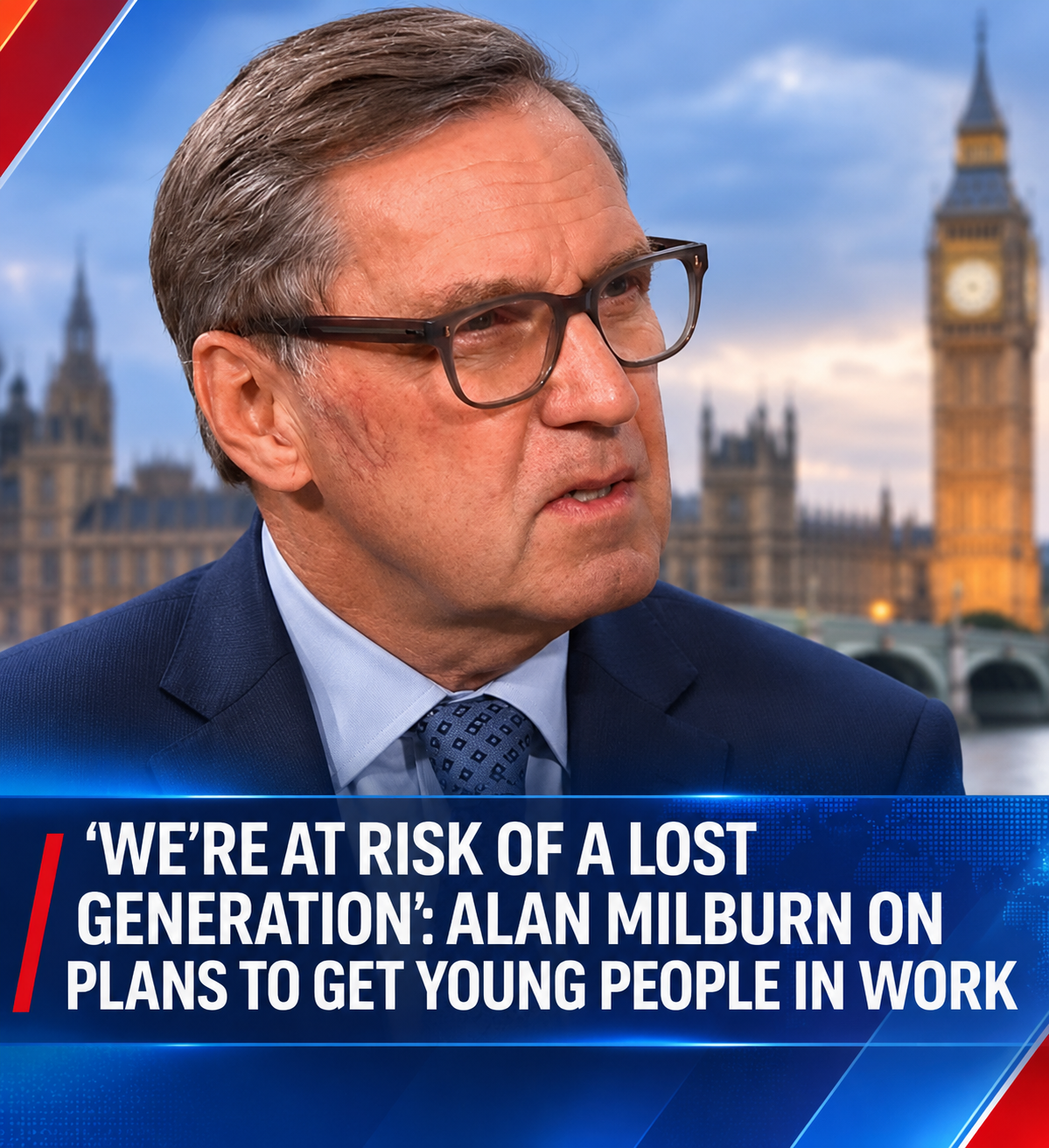
Growing concerns over young people not in education, employment or training have prompted calls for a major shift in government policy, with greater investment in employment support, apprenticeships and education.
The United Kingdom is facing growing concerns over the number of young people who are not in education, employment or training, commonly known as NEET. The situation has raised questions about the effectiveness of existing welfare policies and whether enough is being done to help younger generations enter the workforce.
During a discussion about the issue, a prominent policy advocate warned that the country risks creating a lost generation if more effective action is not taken. However, the speaker stressed that the situation is not inevitable and that different policy choices could produce better outcomes.
International Examples Highlight Different Approaches
Countries such as the Netherlands and Belgium were highlighted as examples of how governments can achieve significantly lower rates of young people outside education and employment.
According to the discussion, these countries have managed to bring their NEET rates down to approximately 5%, demonstrating the potential impact of policies that place greater emphasis on supporting young people.
The speaker argued that the difference does not necessarily come from having more capable young people, but from making different political and economic choices.
The central recommendation is to make opportunities for young people a priority in public policy, ensuring that every individual has a realistic chance to either earn a living or continue learning.
Proposed Welfare Reforms Could Affect Some Young People
One of the most challenging aspects of the proposed reforms involves changes to the welfare system. During the discussion, the speaker acknowledged that some young people could initially become financially worse off as a result of changes to existing benefits.
The argument behind the proposed approach is that the welfare system should focus more strongly on helping individuals find suitable employment rather than allowing long-term dependence on financial support.
The speaker also questioned whether young people experiencing conditions such as anxiety, depression or moderate attention deficit hyperactivity disorder (ADHD) should automatically be viewed primarily through the limitations they face.
Instead, the proposed approach would focus on identifying what individuals are capable of doing, what assistance they need and what employment or educational opportunities could help them move forward.
Employment Support Spending Under Scrutiny
A major concern raised during the discussion was the imbalance between spending on welfare benefits and investment in employment support.
The speaker claimed that for every £25 spent on benefits for young people, only £1 is allocated to employment support. The discussion also referenced an annual expenditure of approximately £22 billion associated with supporting around one million economically inactive young people.
These figures were presented as evidence that the current system places too much emphasis on financial assistance and not enough on helping young people access sustainable employment.
The proposed alternative is to introduce a two-to-one spending ratio in favour of employment support, directing more resources towards job opportunities, apprenticeships, further education and other pathways into work.
Not Every Young Person Needs to Start With a Full-Time Job
The discussion also highlighted the importance of recognising that young people have different circumstances, abilities and levels of readiness for employment.
While some individuals may be ready to enter full-time employment relatively quickly, others may need more gradual support before they can take on a permanent role.
Taking a job for just a few hours each week, participating in a cadetship or enrolling in a college course could all represent meaningful progress.
Other possible routes include apprenticeships, pre-apprenticeship programmes and supported learning opportunities designed to help young people develop the skills and confidence needed to enter the workforce.
The speaker argued that even a small step towards employment can be more beneficial than remaining inactive for an extended period.
Employers Could Play a Bigger Role in Tackling Youth Unemployment
Government policy alone may not be enough to address the problem. Employers could also play an important role by creating more entry-level opportunities and making it easier to recruit younger workers.
Expanding access to apprenticeships, flexible working arrangements and entry-level positions could provide more opportunities for people who lack professional experience.
For young people who are not yet prepared for full-time employment, flexible pathways could offer a practical starting point while allowing them to build workplace experience and develop relevant skills.
A Shift From Welfare Spending to Employment Opportunities
The broader proposal calls for a fundamental change in how the UK approaches support for economically inactive young people. Rather than focusing primarily on benefit payments, the proposed working-state model would place employment, education and practical opportunities at the centre of public policy.
The underlying argument is that financial assistance remains important for people who need it, but it should be accompanied by meaningful opportunities to improve their circumstances.
Creating more jobs, expanding vocational education and strengthening employment support could help young people develop greater independence while contributing to the wider economy.
Conclusion: Preventing a Lost Generation Requires Long-Term Investment
The growing number of young people outside education, employment and training presents a significant challenge for the United Kingdom. The discussion highlights the need to reconsider how public resources are allocated and whether existing welfare policies are doing enough to create opportunities.
While changes to the benefits system could create difficulties for some individuals, the proposed reforms aim to establish a stronger connection between financial support, education and employment.
Ultimately, preventing a lost generation will require more than encouraging young people to find work. It will also depend on whether governments, employers and educational institutions can provide accessible opportunities that reflect the different needs and circumstances of younger generations.